

Leading Hospital – Hong Kong
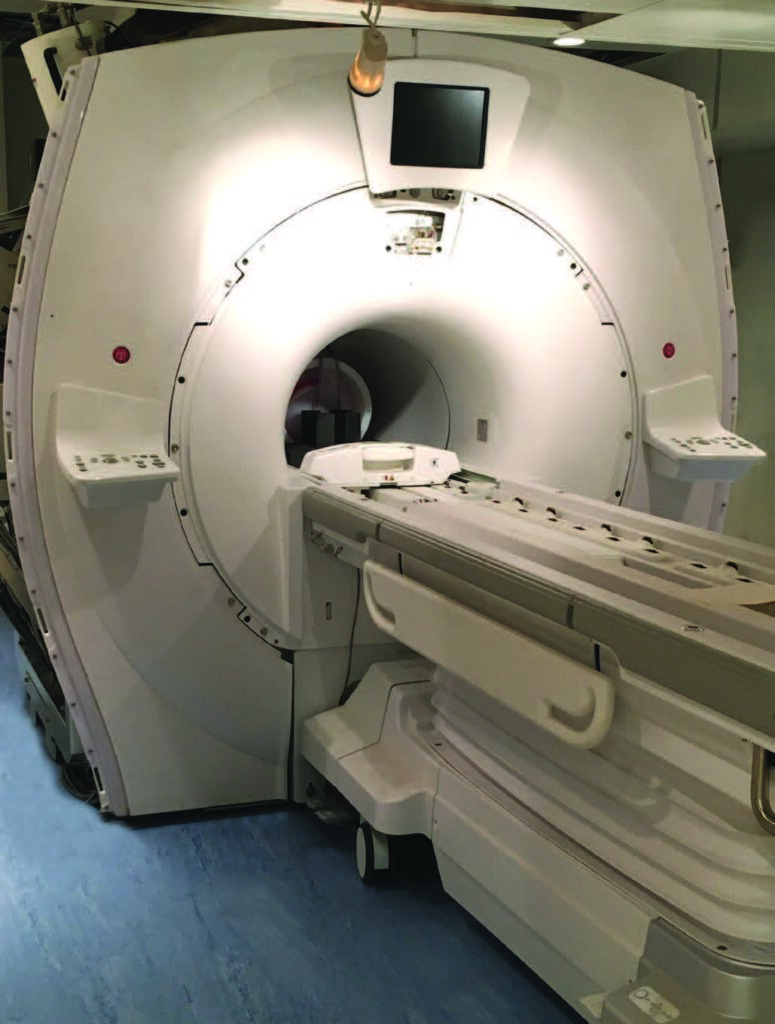
ETS‑Lindgren’s engineering experts were put to the test, quite literally, to diagnose and fix a problem on a magnetic resonance imaging (MRI) project at a leading hospital in Kowloon, Hong Kong. This was a high profile problem since it involved the first 3T magnet installation in Hong Kong. Following the opening of the new MRI facility, the hospital staff noticed artifacts obscured the images produced by the magnet inside. Clear images are essential for proper diagnosis and treatment of patients. Hospital management was upset their investment in a new magnet was not resulting in the additional patients and higher throughput they expected with a state-of-the-art 3T magnet.
ETS‑Lindgren’s engineers knew robust RF shielding, as they have provided for thousands of MRI installations worldwide, ensures clear images from a magnet free of RF artifacts. Unfortunately, the inferior RF shield by an inexperienced contractor was not adequately protecting the magnet from electromagnetic interference (EMI) and adversely affected the System Performance Test (SPT) stability protocols of the 3T magnet. The RF shielding contractor did not have a solution to the problem. Fortunately, ETS‑Lindgren did.
The Problem
- After extensive evaluation of the MRI facility and site surveys of the surrounding area, ETS‑Lindgren determined the 3T magnet could not operate as intended due to quasi-DC interference. ETS‑Lindgren’s engineering experts were put to the test, quite literally, to diagnose and fix a problem on a magnetic resonance imaging (MRI) project at a leading hospital in Kowloon, Hong Kong. This was a high profile problem since it involved the first 3T magnet installation in Hong Kong. Following the opening of the new MRI facility, the hospital staff noticed artifacts obscured the images produced by the magnet inside. Clear images are essential for proper diagnosis and treatment of patients. Hospital management was upset their investment in a new magnet was not resulting in the additional patients and higher throughput they expected with a state-of-the-art 3T magnet. ETS‑Lindgren’s engineers knew robust RF shielding, as they have provided for thousands of MRI installations worldwide, ensures clear images from a magnet free of RF artifacts. Unfortunately, the inferior RF shield by an inexperienced contractor was not adequately protecting the magnet from electromagnetic interference (EMI) and adversely affected the System Performance Test (SPT) stability protocols of the 3T magnet. The RF shielding contractor did not have a solution to the problem. Fortunately, ETS‑Lindgren did. The Solution
- The electromagnetic interference was produced from traffic on the hospital entrance driveway and parking garage, which were located directly above the 3T magnet.
- The RF shielding was not adequate to prevent the interference from entering the MRI facility; the shielding contractor had no experience with complex installations near high traffic areas.
- The MRI facility and 3T magnet were completely installed; the cost to move the MRI facility away from the source of quasi-DC interference was prohibitive.
The Solution
- ETS‑Lindgren installed a passive magnetic shield behind the existing shield walls and ceiling – within a tight and very limited working space.
- A Magnetic Active Compensation System (MACS™) by ETS‑Lindgren was connected to the compensation coils installed along the front and rear walls of the MRI facility. The system provides high performance attenuation of dynamic environmental magnetic fields for MRI sites.
Performance Confirmation
- Following the enhanced shield and MACS installation, ETS‑Lindgren mapped the DC fringe field to ensure the moving mass interaction was reduced, thus limiting the adverse effects on the operation of the 3T magnet.
- The MACS was calibrated on site using ETS‑Lindgren’s Magnetic Field Survey software and calibration tools in conjunction with the 3T magnet provider’s Field Stability Test applications.
- To evaluate the effectiveness of the installed MACS, quasiDC magnetic field surveys were performed using two 3-axis Bartington magnetometers.
— One magnetometer was the ETS‑Lindgren MACS system sensor, located near the ISO center of the 3T magnet.
— The second magnetometer was the outside reference sensor located more than 2 meters away from the compensation system coil volume.
— The Z-axis for each magnetometer was measured in the horizontal B0 direction. - During the MACS calibration process, the measured quasiDC magnetic field disturbances near the ISO center of the 3T magnet were above 20mG (p-p) with the MACS switched (OFF). With the MACS switched (ON), the measured quasi-DC disturbances near the ISO center of the 3T magnet were reduced to 3mG (p-p) or less in the horizontal B0 (Z axis) direction while vehicles were moving in the parking garage area located directly above the installed 3T magnet.
- Upon completion of the calibration, the 3T magnet was able to pass all SPT stability and quality control protocols.
Summary
ETS‑Lindgren performed RF testing of the existing shield upon arrival on site to benchmark the current RF shield performance. Site surveys determined the existing shielding was not protecting the 3T magnet from the electromagnetic interference created by high traffic located directly above the MRI facility. After enhancing the shielding and MACS installation, ETS‑Lindgren performed RF testing of the MRI facility to confirm performance improvement and functionality of the 3T magnet. Working in partnership with the 3T magnet provider resulted in the desired outcome of images free from RF artifacts. Hospital staff benefited from the high quality clear images now produced by the 3T magnet; they are diagnosing patients with confidence and providing the high quality care for which they are well known.
About ETS‑Lindgren
ETS‑Lindgren is an international manufacturer of components and systems that measure, shield, and control electromagnetic and acoustic energy. The company’s products are used for electromagnetic compatibility (EMC), microwave and wireless testing, electromagnetic field (EMF) measurement, radio frequency (RF) personal safety monitoring, magnetic resonance imaging (MRI), and control of acoustic environments.
Headquartered in Cedar Park, Texas, ETS‑Lindgren has manufacturing facilities in North America, Europe, and Asia. Additional information about ETS‑Lindgren is available at www.ets-lindgren.com. Additional information about ETS‑Lindgren’s parent company ESCO and its subsidiaries is available at www.escotechnologies.com.